
Acts 9:20–27: A Running Basket Case
Or better yet, run from what and whom? Emphasis: you don’t run from Jesus, the Lord, the Church and what is blessed. You flee from evil. You run to Christ; you get to him as fast as you can.
The blessing in this passage is not that Paul escaped. The blessing is that the man who once persecuted Jesus now proclaims Him as Lord. His escape simply preserves the messenger so the message can continue. It fulfills the Lord’s declaration that Saul is His chosen instrument. When we read Acts 9:20–27, we often remember one image above all others: Paul being lowered in a basket through an opening in the city wall. It’s a dramatic scene, and it’s easy to make the escape the center of the story.
But Luke doesn’t tell this account so we will admire Paul’s getaway. He tells it so we will hear Paul’s confession:
“Jesus is the Son of God!”
The proclamation is the point. The basket is only the vehicle.
Our culture often treats leaving as the first solution to discomfort. We walk away from relationships; how many divorces can you count on fingers and toes. People move from church to church as though they were choosing a fast-food restaurant; they don’t feed me what I want, at the right price, or with any freebies…next. Jobs and careers are a case in point. Keep moving until you get what you want in a salary, bonuses, benefits, and the retirement package at Sun City. Commitments become optional, and responsibilities are negotiated whenever life becomes difficult. As a chaplain, I regularly meet people who have become spiritual runaways. They are not simply changing locations—they are fleeing pain, conviction, or hardship without asking whether God is calling them to remain faithful. Some even escape the pain and suffering they caused to go spread their toxicity even more.
Not long ago, a good friend’s teenage daughter disappeared in San Antonio – how terrifying that must have been. She had run away. Her life has been tinged by hardship, and she comes from circumstances where right and wrong have been blurred. Every passing day increased the danger. Running rarely solves the deeper problem. More often it leads to isolation, bitterness, destructive choices, and sometimes consequences that are tragic beyond imagination.
My immediate thought was, “Launch a search-and-rescue mission.”
My friend Noah understands that instinct well. When a hiker disappears in the Bob Marshall Wilderness, he calls out, “Get in the Chopper!”. A team assembles. A mission begins. Everyone leaves the base to search for the one who is missing. It reminds us of Jesus’ picture of the shepherd leaving the ninety-nine to find the one lost sheep.
Yet Acts 9 is not a lost-sheep story.
Saul has already been found.
The risen Christ has rescued him, transformed him, and commissioned him. Now the issue is not finding him—it is preserving him so he can fulfill the mission God has given him. And he knows it will be followed by suffering – You reap what you sow Saul!
That is why Scripture also teaches that there are times when leaving is the faithful response (leaving the past behind). Paul fled Damascus because his life was genuinely in danger—not because his feelings were hurt, his ministry became inconvenient, or people failed to appreciate him. His departure protected the mission God had entrusted to him.
I have experienced something similar in my own life. My family and I left Washington and came to Helena because I became convinced that remaining where we were posed a genuine danger to our family’s spiritual health. Leaving was not an escape from discomfort; it was a decision to preserve what God had entrusted to me. It has not been an easy ride either. There is suffering still.
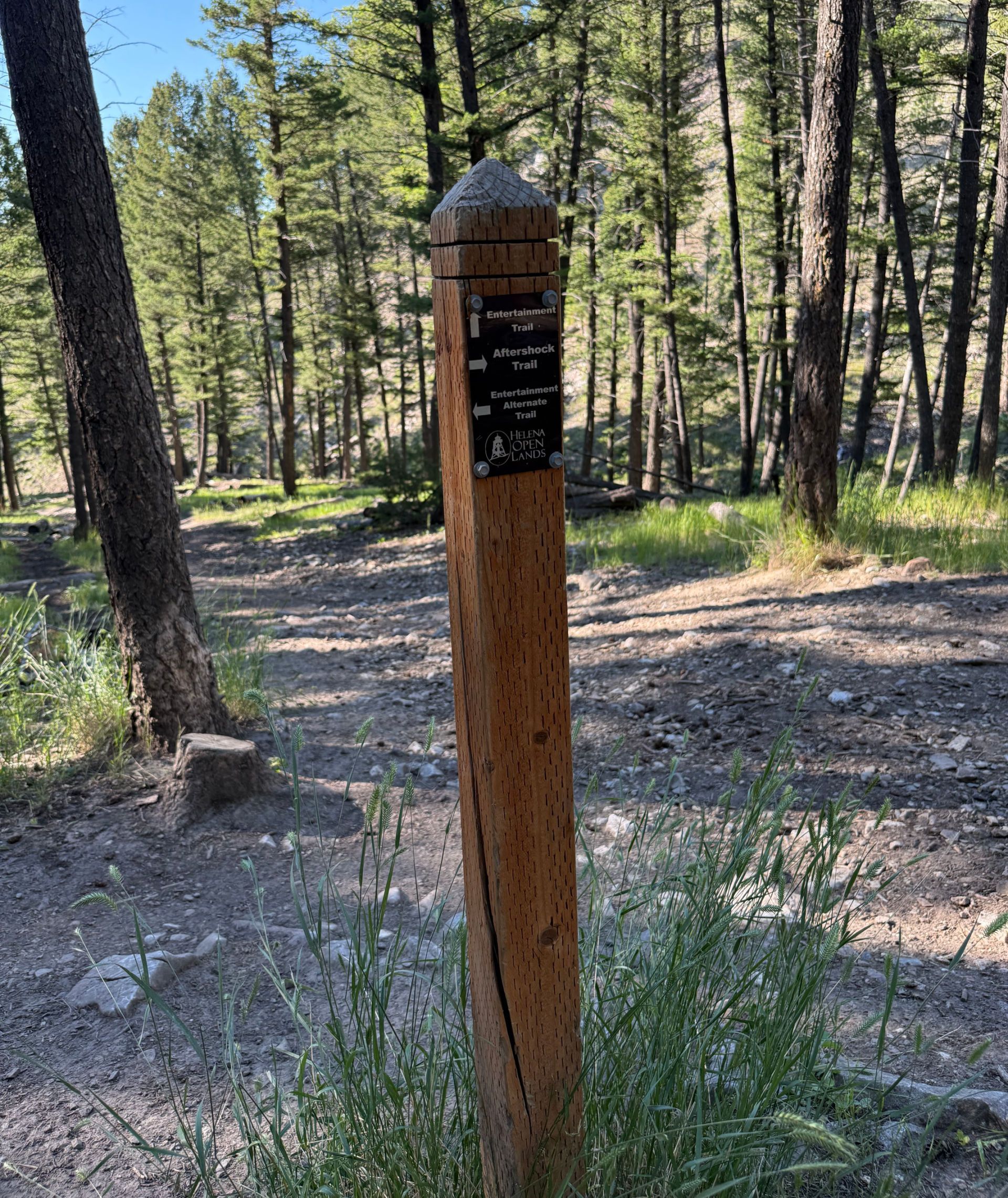
On a recent hike outside Helena, I stopped at a wooden marker where three trails split in three directions. One arrow pointed ahead, one right, one back the way I’d come. Standing there, you can’t take all three. You have to choose, and the sign only helps if you know where you’re trying to go. That’s the position Saul’s escape puts before us. The question is never simply “should I stay or should I go?” It’s “which direction is Christ?”
So how do we know the difference?
When is leaving an act of faith, and when is it simply running away?
How should Christians respond when spiritual difficulty awakens the desire to flee?
John Bunyan captures this struggle beautifully in The Pilgrim’s Progress. Christian looks “this way and that, as if he would run.” But before he does, Evangelist comes alongside him and directs him back toward the narrow way. Sometimes our first instinct is to run. What we need most is not an escape route through Christ minded wisdom that helps us discern whether God is calling us to stand firm or to move forward for the sake of His kingdom.
Acts 9 provides that wisdom. Before we ever see a basket hanging from the city wall, we hear a man proclaiming that Jesus is the Son of God. The message comes first. The escape serves the message. Whatever junction you’re standing at, the arrow that matters points to Him. Proclaiming Jesus will ultimately prevent us from becoming a basket case!
About the Author
Patrick E. Cobb serves as Pastor of Grace Community Fellowship in Helena, Montana, a role he began in July 2025. A Texas native, he earned his undergraduate degree from the University of Texas at San Antonio (1994) and a Master of Divinity from Austin Presbyterian Theological Seminary (2003).
His ministry has spanned seven states and included work as a hospital chaplain, an associate pastor, and youth and family ministry in Birmingham, Alabama. In 2007, Patrick and his wife Melani served as missionaries in Mexico, leading housing, health, and disaster relief efforts.
A U.S. Army chaplain since 2010, he deployed to Iraq in 2011 and 2012 and has been honored with a Bronze Star, two Meritorious Service Medals, and three Army Commendation Medals, among others; he continues to serve as a reservist.
Patrick and Melani have three children—Soren, Addison, and Carson—and he remains devoted to Reformed theology, faithful preaching, and discipleship.
Recent Posts